TMS Therapy
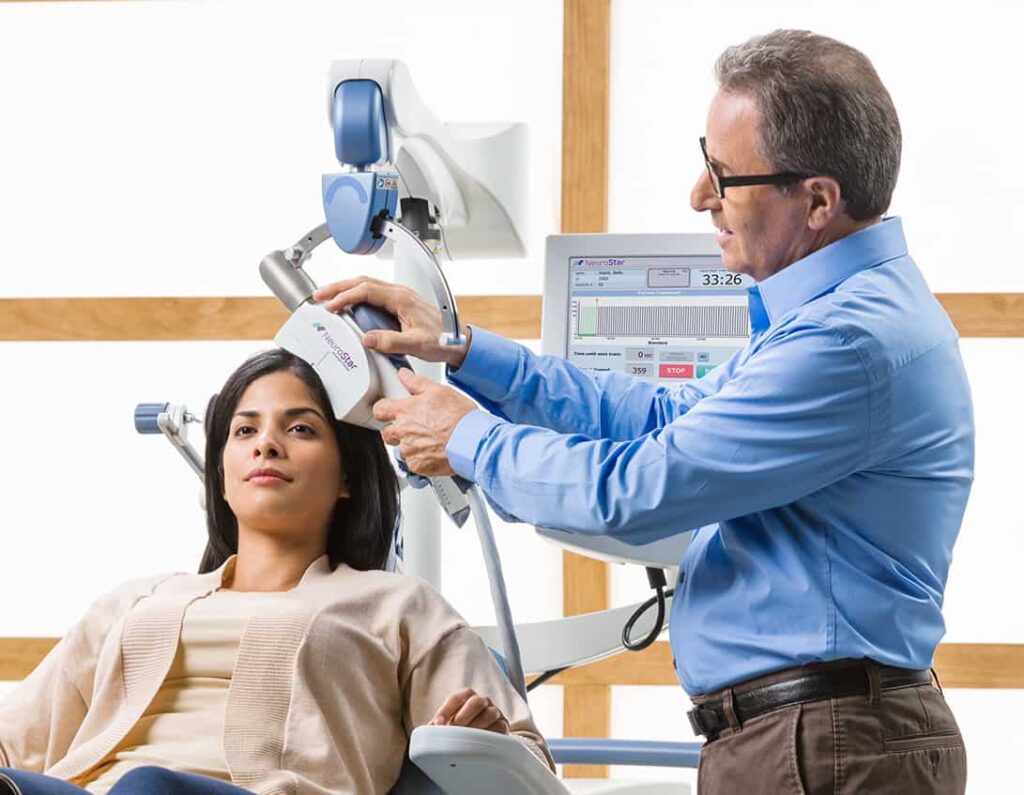
Transcranial Magnetic Stimulation (TMS) is a non-invasive, FDA-approved treatment for individuals struggling with depression that has not adequately improved with antidepressant medications. TMS uses gentle magnetic pulses to stimulate areas of the brain involved in mood regulation and does not require anesthesia or sedation.
We provide comprehensive evaluations to determine whether TMS may be appropriate for your treatment needs. If you have struggled to find sufficient improvement with antidepressant medications alone, TMS may be a meaningful next step.
What to expect
A clear path, every step explained.
- 01
Comprehensive evaluation
We provide a thorough psychiatric evaluation to determine whether TMS may be appropriate for your treatment needs.
- 02
Brief, in-office sessions
Each session is conducted in our office. You stay awake and alert throughout — no anesthesia or sedation required.
- 03
Return to your day
There is no recovery time after a session. Most patients return to work, school, or daily activities immediately.
Frequently asked
TMS Therapy: questions we hear often.
How long is the TMS treatment?
TMS treatment is typically administered five times a week for four to six weeks, for a total of 20–30 sessions. Each treatment session lasts approximately 20–40 minutes.
Is TMS uncomfortable or painful?
TMS therapy is a low-intensity, non-invasive procedure. It delivers magnetic pulses that gently stimulate targeted areas of the brain without altering brain structure. Some patients experience mild headaches, especially early in treatment, but these are usually temporary and resolve on their own.
Is TMS like ECT (shock therapy)?
No. TMS is not the same as electroconvulsive therapy (ECT). There are several important differences between these treatments. ECT uses a strong electrical current that induces a controlled seizure, which is why anesthesia is required. In contrast, TMS does not induce seizures and does not require anesthesia. TMS uses magnetic pulses that easily pass through the skull to stimulate specific brain regions without penetrating deeply or disrupting brain structure.
Does TMS therapy cause memory loss?
No. TMS therapy is not associated with memory loss.
Are there side effects of TMS therapy?
Approximately 1 in 10,000 patients may experience a seizure during Transcranial Magnetic Stimulation therapy. It is important to inform your provider if you have a history of seizures. The most common side effect is a mild headache, typically occurring after the first two or three treatments.
Is TMS covered by insurance?
Most insurance plans cover TMS therapy. We obtain prior authorization from insurance before treatment.
Who cannot get TMS therapy?
Most individuals are able to receive TMS therapy, but there are some exceptions. TMS may not be appropriate for: patients who have undergone brain surgery and still have magnetic metals in the brain; patients who have not responded to other depression treatments; very elderly patients; and patients who have seizures. Your provider will review your medical history to determine if TMS is safe and appropriate for you.
Do I need to be hospitalized for TMS?
No. TMS is an outpatient procedure. You can drive yourself home and resume normal activities after each treatment session.
Who administers TMS?
The initial treatment session, including dose determination, is always performed by a physician. Ongoing daily treatments are administered by trained technicians under physician supervision.
Take the next step
Taking the first step toward care can make a meaningful difference.
Reach out today and our team will guide you through what comes next.